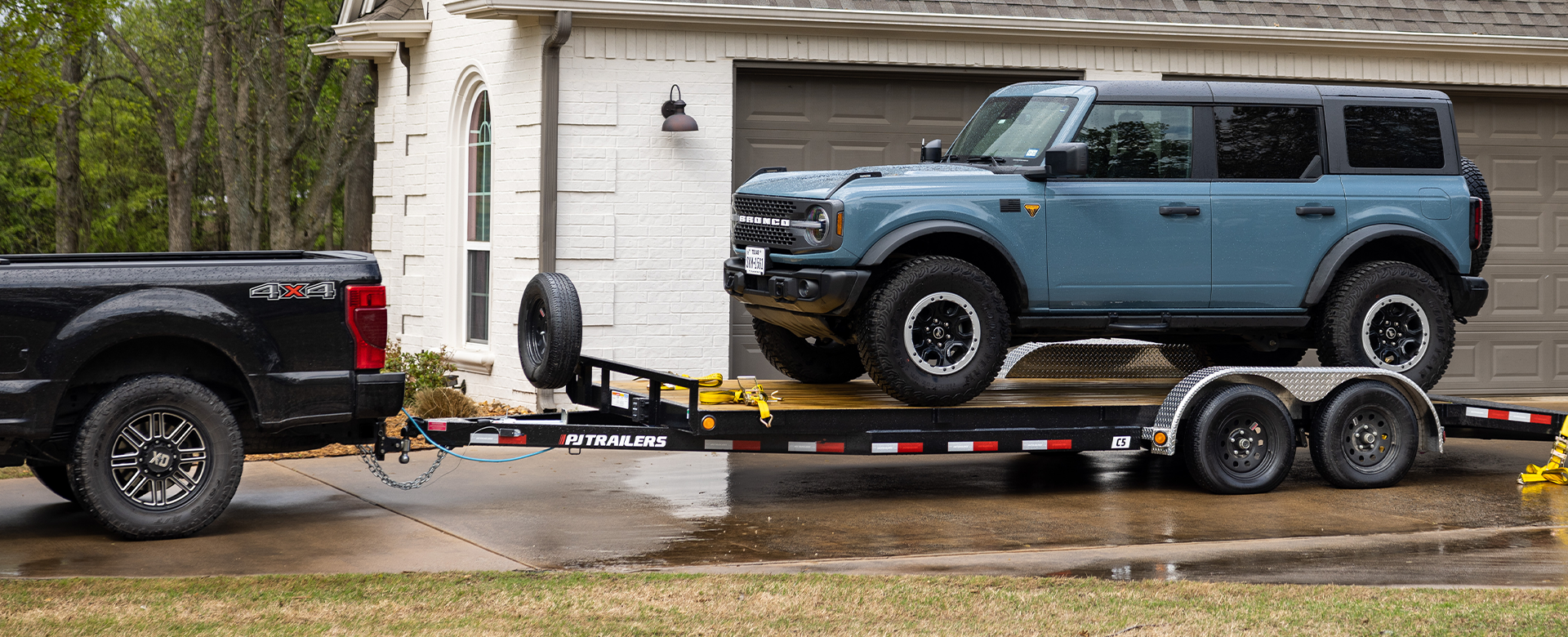
Car Hauler Trailers
Looking for a car hauler trailer that’s built to perform mile after mile? Explore a complete selection of new and used car haulers designed for strength, safety, and reliability.
Car Hauler Trailer Models
Whether you’re hauling a single vehicle or managing fleet deliveries, car hauler trailers provide the strength, stability, and confidence needed for safe transport. These trailers are designed with durable frames, balanced weight distribution, and reliable tie-down systems to protect every load.
Available in both open and enclosed configurations, car haulers come in a range of lengths, capacities, and deck styles to suit personal, professional, and commercial use. Choose from steel or aluminum construction, multiple axle options, and features like ramps, dovetails, and winches to make loading and unloading smooth and efficient.
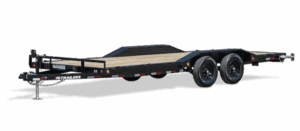
5" CHANNEL BUGGY HAULER (B5) (B5)
| Lengths: | 16 – 22' |
|---|---|
| Width: | 102" |
| GVWR: | 10,000 lbs |
| Load Capacity: | 7,350—7,729 lbs |
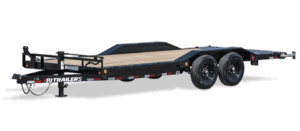
6" Channel Super-Wide (B6)
| Lengths: | 20 – 24' |
|---|---|
| Width: | 102" |
| GVWR: | 14,000 lbs |
| Load Capacity: | 10,580—12,650 lbs |
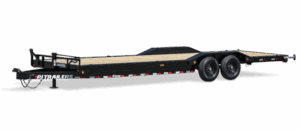
8" Channel Super-Wide (B8)
| Lengths: | 24 – 40' |
|---|---|
| Width: | 102" |
| GVWR: | 14,000 lbs |
| Load Capacity: | 9,710—17,710 lbs |
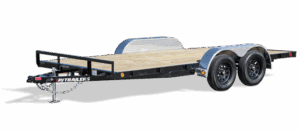
4" Channel Carhauler (C4)
| Lengths: | 14 – 20' |
|---|---|
| Width: | 83" |
| GVWR: | 7,000 lbs |
| Load Capacity: | 5,000—5,300 lbs |
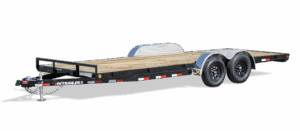
5" Channel Carhauler (C5)
| Lengths: | 16 – 22' |
|---|---|
| Width: | 83" |
| GVWR: | 7,000 lbs |
| Load Capacity: | 4,650—5,000 lbs |
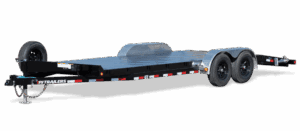
Steel Deck Car Hauler (CH)
| Lengths: | 18 – 22' |
|---|---|
| Width: | 83" |
| GVWR: | 7,000 lbs |
| Load Capacity: | 4,500—7,500 lbs |
Car Hauler Trailer Frequently Answered Questions
Find quick answers to common Auto/Car Hauler questions. Learn about types, capacities, maintenance, and safety tips to choose the right trailer for your needs.
The size of the car hauler you need depends on your vehicle’s length, weight, and wheelbase. Always verify the trailer’s gross vehicle weight rating (GVWR) and payload capacity to ensure it can safely support your vehicle’s weight, including any additional equipment or cargo.
When choosing a car hauler, consider construction quality, capacity, and features. Look for a strong frame (steel or aluminum), properly rated axles, and a braking system that meets your towing needs. Ramps, tie-down points, and deck material are also important for safety and ease of use. Finally, check the GVWR, empty weight, and load capacity to make sure the trailer is properly matched to your tow vehicle and hauling goals.
Each material has advantages. Aluminum car haulers are lighter, corrosion-resistant, and easier to tow, making them ideal for frequent or long-distance hauling. Steel car haulers, on the other hand, are typically more affordable and known for their rugged strength and durability. Your choice depends on how often you haul, your budget, and your maintenance preferences, aluminum costs more upfront but resists rust; steel is heavier but built tough.
An open car hauler has an exposed deck, making it lighter, easier to load, and more affordable, great for short-distance or everyday use. An enclosed car hauler provides full protection from weather, debris, and road grime, ideal for transporting classic cars, show vehicles, or high-value assets. Open haulers prioritize efficiency and cost, while enclosed models prioritize protection and security.
Yes. While designed for vehicles, car hauler trailers are versatile enough to transport other cargo such as ATVs, small tractors, construction equipment, or pallets of materials. Just ensure your load is evenly distributed and properly secured with straps or chains, and that it does not exceed the trailer’s weight capacity or violate towing regulations.